
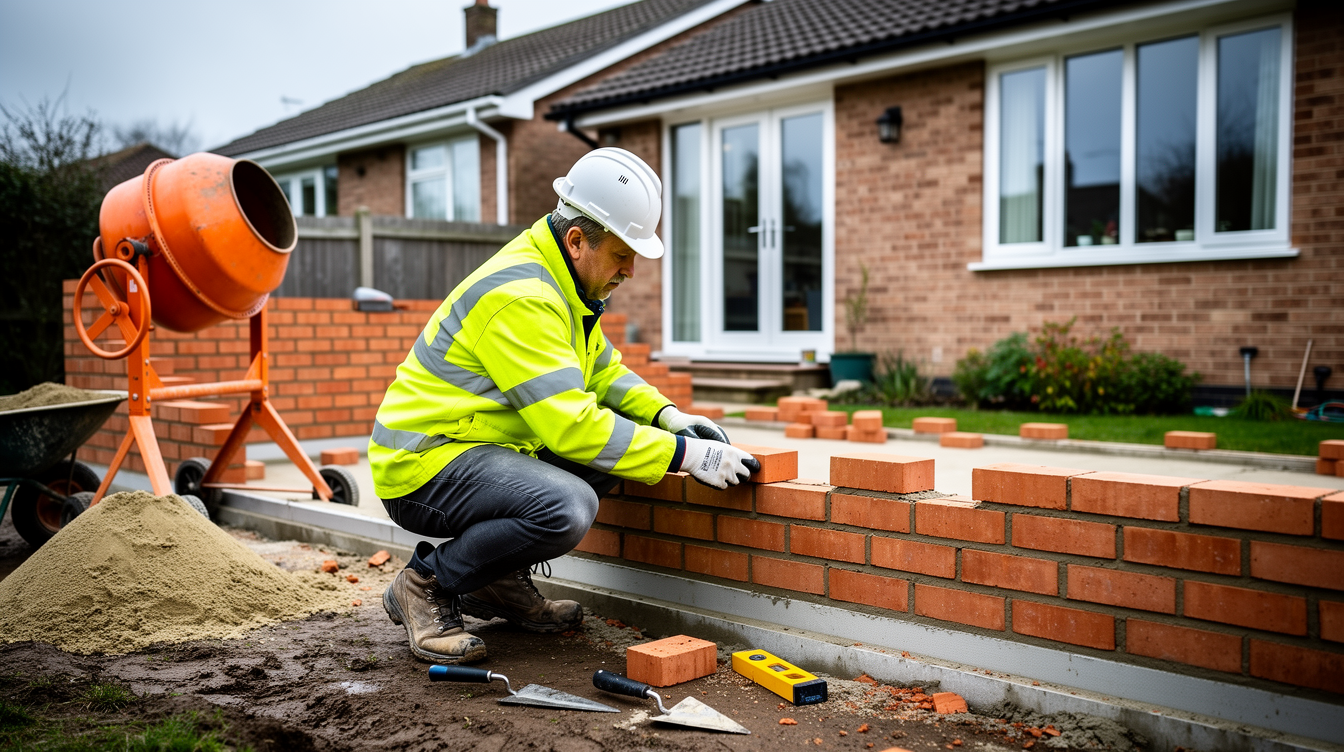
A building project is the biggest job a homeowner will trust a tradesman with, so a builder's website has to earn trust before the call, not during it. Everything on the page is either building that trust or leaking it.
Here is what to include so a homeowner is already half-decided before they dial.
A portfolio of real completed builds does the heavy lifting
The most persuasive thing on a builder's website is a portfolio of real, finished projects. Extensions, loft conversions, renovations, new builds: show clear before-and-after photos of work you actually did, ideally with the location. A homeowner imagining their own extension needs to see one you have already delivered. Stock photos do the opposite and quietly cost you the trust you are trying to build.
Named accreditations beat vague claims
"Fully qualified and insured" is a vague claim; "FMB member, CHAS accredited, £2m public liability" is proof. Name the specific accreditations you hold, show the badges, and state the cover. Specific, checkable claims build trust; vague ones invite doubt. If you are a member of the Federation of Master Builders or registered with TrustMark, that belongs near the top of the page.
Genuine reviews answer the question "can I trust them"
Real reviews from named clients answer the one question every homeowner is silently asking. Show genuine Google reviews on the page, with the customer's name and ideally the project. A wall of unattributed testimonials does nothing; a handful of real, specific reviews from local homeowners closes the gap between interested and convinced.
Clear pricing guidance removes the biggest worry
Builders rarely publish fixed prices, and homeowners do not expect them to, but a website that gives some honest pricing guidance removes the biggest source of hesitation. Explain how you quote, what a typical project of each type tends to involve, and that estimates are free and itemised. Silence on price reads as something to hide; honest guidance reads as confidence.
An about page with a real face closes the gap
A homeowner is hiring a person, not a logo. An about page with a real photo of you, the years you have been building, and a few honest sentences about how you work turns a faceless company into someone they can picture on their site. For a family-run builder, this page is often the one that earns the call.
Speed and mobile-first keep the trust you have built
All of this trust-building is wasted if the website is slow or breaks on a phone. Most homeowners browse builders on a phone in the evening, so the site has to be fast and mobile-first. A hand-coded HTML site loads in under a second; a bloated WordPress build loses people before the portfolio even appears. Speed is what keeps the trust the rest of the page builds.
Want a builder's site that earns trust?
I build fast, mobile-first websites for Hertfordshire builders, built around your real completed projects, your accreditations and your reviews. From £750, and you own everything. I'm based in Watford.
The bottom line for builders: a homeowner trusting you with a major build decides before they call, so the website has to earn that trust on its own. Include a portfolio of real completed projects, named accreditations, genuine reviews, honest pricing guidance, and an about page with a real face, all on a fast, mobile-first site. Do that and the call comes from someone already half-decided.